
NewsDetails
FRP Storage Tank Design Guide: Resin Selection, Filament Winding and Corrosion Resistance
author:Jinyang time:2026-07-06 00:00:00 Click:129
In chemical, water treatment and environmental projects, choosing the right storage tank material directly affects long-term safety and operational cost. FRP (Fiberglass Reinforced Plastic) storage tanks have become a preferred alternative to steel, concrete and stainless steel because of their inherent corrosion resistance, lightweight structure and flexible design. By combining high-strength E-glass fiber with chemically compatible resin, a properly designed FRP tank can withstand aggressive media for decades. This guide explains how FRP tanks are engineered, how to select the correct resin system, and what parameters to review before specification.
How FRP Storage Tanks Are Engineered
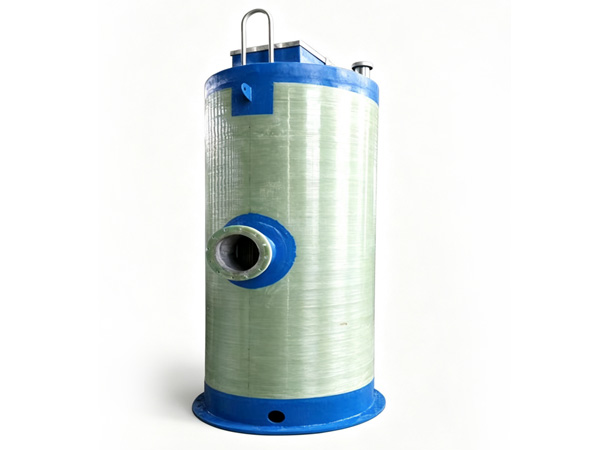
Most vertical and horizontal FRP tanks are manufactured by the filament winding process. Continuous glass rovings are fed through a resin bath and wound onto a rotating mandrel at controlled angles. The structural hoop and helical layers carry pressure and bending loads, while a chemically rich inner layer (the corrosion barrier) protects the structural laminate from the stored medium. This layered design allows engineers to tailor the laminate exactly to the required temperature, concentration and pressure, rather than oversizing a standard metal tank.
Material Selection: Resin and Glass Fiber
Resin choice is the single most important decision for service life. Polyester resin is economical for mild water and sewage service; vinyl ester resin is recommended for strong acids, alkalis and solvents because of its superior hydrolysis and blister resistance. The reinforcement is usually E-glass, with C-glass or surface veil used in the corrosion barrier.
| Parameter | Specification |
|---|---|
| Resin Options | Isophthalic / Orthophthalic Polyester, Vinyl Ester |
| Reinforcement | E-glass roving, C-glass surface veil |
| Design Standard | GB/T 14363, ASME RTP-1, BS 4994 |
| Working Temperature | Normal ≤ 90°C (higher with vinyl ester) |
| Working Pressure | Atmospheric to ~0.6 MPa (custom) |
| Capacity Range | 0.5 m³ to 200+ m³ |
Comparison: FRP vs. Steel vs. Concrete
Owners often compare FRP with traditional materials on initial purchase price only. Over the tank's lifetime, however, maintenance, coating and replacement costs change the picture considerably.
| Metric | FRP Tank | Steel Tank | Concrete Tank |
|---|---|---|---|
| Corrosion Resistance | Excellent (no coating needed) | Poor (needs painting / lining) | Fair (acid attack over time) |
| Service Life | 20-30 years | 10-15 years with maintenance | 30+ years but leak-prone |
| Weight | Light (about 1/4 of steel) | Heavy | Very heavy |
| Installation | Quick, no heavy crane | Welding & inspection required | On-site casting, slow |
| Lifecycle Cost | Low | Medium-High | Medium |
Key Industry Applications
FRP tanks are widely used in sewage treatment, desalination, electroplating, chemical processing, power plants and agricultural irrigation. They store hydrochloric acid, caustic soda, brine, effluent and drinking water safely. Their non-sparking, non-magnetic nature also makes them suitable for explosion-proof and indoor installations.
Installation and Maintenance Guidelines
Tanks should be installed on a flat, rigid concrete foundation free of sharp stones. During filling, the water level must be raised evenly to avoid vacuum collapse; vacuum relief vents must be checked before startup. Routine inspection includes visual examination of the inner barrier, flange tightness and vent operation. Avoid impact loads and over-pressure; do not weld nearby unless the tank is emptied and ventilated.
Quality Standards and Compliance
Reliable FRP tanks are manufactured to GB/T 14363, ASME RTP-1 or BS 4994, with laminate thickness verified by ultrasonic testing and the corrosion barrier checked by spark testing. Material certificates for resin and glass roving should be supplied with the tank. For export projects, drawings and test reports are provided to match project specifications.
Conclusion
An FRP storage tank delivers the best balance of corrosion resistance, weight and lifecycle cost when the resin system and laminate schedule are matched to the stored medium. By following the material selection table above and the installation guidance, owners can specify a tank that operates safely for decades. Hebei Jinyang Environmental Protection Equipment Co., Ltd. designs and manufactures FRP tanks to project-specific requirements and supports customers worldwide with full technical documentation.
References
GB/T 14363 — Glassfiber Reinforced Plastic Chemical Tanks
ASME RTP-1 — Reinforced Thermoset Plastic Corrosion-Resistant Equipment
BS 4994 — Design and Construction of Vessels and Tanks in Reinforced Plastics
 Recommended Products
 Contact us
—— Contact:Ms. Wang
—— Tel:+86 19948391999
—— Email:JYFRP@outlook.com
—— Url:https://www.jinyanggep.com
—— Address:Zaoqiang County, Hengshui City, Hebei Province